Drug Channels delivers timely analysis and provocative opinions from Adam J. Fein, Ph.D., the country's foremost expert on pharmaceutical economics and the drug distribution system. Drug Channels reaches an engaged, loyal and growing audience of more than 100,000 subscribers and followers. Learn more...
Showing posts with label Industry Trends. Show all posts
Showing posts with label Industry Trends. Show all posts
Every year, Drug Channels reviews drug pricing trends at the largest pharmaceutical manufacturers. This year's disclosures provide early evidence that the economics of the U.S. drug channel—and the strategies manufacturers use to secure market access—are beginning to change.
We review the following eight companies: Bristol Myers Squibb, Eli Lilly and Company, Genentech, GlaxoSmithKline, Sanofi, Takeda, Teva, and UCB. You can find links to each company’s data in the appendix.
Our review found:
Brand-name drug list prices continued to rise modestly, while mandatory and voluntary rebates, discounts, and fees reduced net prices at seven of the eight manufacturers.
The average gross-to-net price difference was –5.5%, reflecting an average list price increase of 3.7% and an average net price decline of 1.8%.
For the three manufacturers that disclosed these data, rebates, discounts, and other fees reduced the selling prices of brand-name drugs to less than half of their list prices.
Sanofi's latest and historical disclosures provide one of the clearest illustrations yet of the drug channel's changing economics. Since 2020, the company's estimated U.S. biopharmaceutical sales have grown far faster than rebate payments. As a result, the share of its gross sales returned to payers as rebates declined from 51% to 39%.
Taken together, this year's manufacturer disclosures suggest that the gross-to-net bubble is growing more slowly—and even deflating in parts of the market. Meanwhile, the Net Pricing Drug Channel (NPDC) is becoming visible in manufacturers’ pricing disclosures and financial statements.
The 340B Drug Pricing Program continues to redefine the meaning of "skyrocketing."
For 2025, discounted purchases under the 340B program reached an astounding $100 billion—23% higher than in 2024.
The gross-to-net difference between list prices and discounted 340B purchases—a proxy for funds available to covered entities—also grew, to $79.5 billion (+$12.0 billion).
Hospitals again accounted for 87% of 340B purchases.
340B purchases are now more than 70% larger than Medicaid’s net prescription drug spending. The program now accounts for nearly one-fifth of the total U.S. gross-to-net bubble.
During DCI’s June webinar, I predicted that the 340B program would move from an era of expansion and opacity to one of transparency and accountability.
But given the latest growth figures, I worry that reform of this undermanaged, out-of-control program may never happen. Has the program become too big to reform?
Read on for our full analysis—and consider whether 340B will ever face its true day of reckoning.
It’s time for Drug Channels’ annual look at pharmacist salaries and employment. The latest data might be a tough pill to swallow.
As we predicted, the situation was grim for retail pharmacists. Employment in retail outpatient pharmacies fell by 8,200 positions in 2025, following a drop of 11,700 positions over 2023 and 2024 combined.
Meanwhile, pharmacist employment at hospitals grew by 3,000 positions, after hospitals added more than 11,000 pharmacist jobs in 2023 and 2024. Nearly half of all pharmacists now work outside a traditional retail setting.
Overall pharmacist salaries averaged $140,920, but varied widely across practice settings. Salary growth in many settings, however, did not keep pace with overall inflation.
Our 2026 Economic Report on U.S. Pharmacies and Pharmacy Benefit Managers documents how and why retail pharmacy economics are under sustained pressure. Since 2018, the two remaining national drugstore chains have collectively closed nearly 3,000 locations, reflecting margin compression and weaker front-end economics.
Three is still the magic number for pharmacy benefit managers (PBMs).
For 2025, 80% of all equivalent prescription claims were processed by three companies: the CVS Caremark business of CVS Health, the Express Scripts business of Cigna, and the Optum Rx business of UnitedHealth Group. Express Scripts continued to pull ahead of its peers, while CVS Caremark’s claim volume declined for the second year.
Independent PBMs continued to gain business from these larger PBMs, showing fragmentation at the margins. Many smaller PBMs still rely on their larger competitors for claims processing, network management, and rebate negotiation. So even if a plan sponsor chooses an alternative PBM, the Big Three can still win with behind-the scenes economics.
The Big Three PBMs’ dominance persists, but they face growing regulatory and competitive constraints. The largest PBMs are restructuring their businesses in response to client demands, legislative changes, and legal pressures. The emerging Net Pricing Drug Channel will accelerate these shifts, forcing changes in how PBMs generate profits, structure contracts, and justify their role in the drug channel.
Here at Drug Channels, we’ve been closely tracking the evolution of the pharmacy benefit management (PBM) industry for many years.
The short video below—excerpted from DCI’s recent PBM Industry Update 2026: Trends, Challenges, and What’s Ahead video webinar—reviews the shifting market positions of the largest PBMs and explains why vertical integration continues to reshape the industry’s competitive dynamics.
I also discuss the proliferation of smaller PBMs, many of which still depend on the largest PBMs for claims processing, pharmacy networks, rebate negotiation, and other core services. However, the market is entering what we believe will be a significant shakeout phase.
The growing administrative complexity of state and federal regulation will disproportionately burden smaller PBMs that lack the scale, capital, and integrated infrastructure of the largest organizations. Over the next five years, we expect many smaller PBMs to disappear through acquisition, consolidation, or business failure.
Meanwhile, vertical integration will continue to create strategic and financial advantages for the largest healthcare organizations—along with new opportunities to shift profits, manage risk, and coordinate services across multiple parts of the healthcare system.
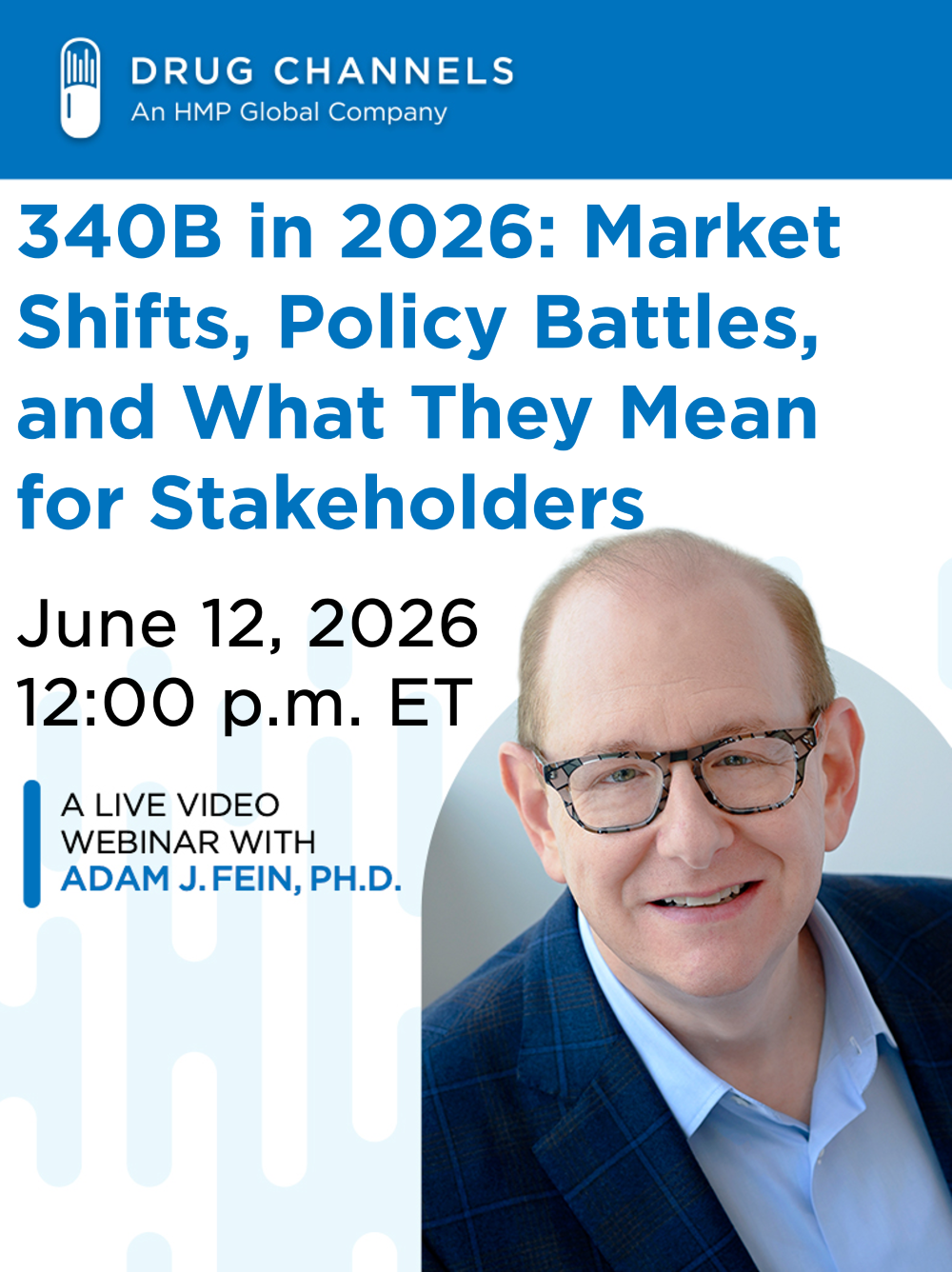
Don't miss DCI’s next live video webinar on Friday, June 12, 2026, from 12:00 p.m. to 1:30 p.m. ET. Adam J. Fein and Tyler Novotny will unpack the good, the bad, and the ugly of the 340B program—and what it means for you. Click here to learn more and sign up.
Join industry expert Adam J. Fein, Ph.D., and his colleague Tyler Novotny, MBA, for an exclusive deep dive into the 340B Drug Pricing Program—one of the most complex and controversial segments of the U.S. pharmaceutical market.
In this all-new webinar, Adam and Tyler will deliver a fact-based, data-driven analysis of the 340B program’s structure, economics, and rapid evolution. He’ll unpack the key controversies reshaping the program, explain what’s really happening behind the headlines, and provide a clear, actionable outlook for stakeholders across the drug channel.
Whether you’re in pharma, provider organizations, pharmacy, or policy, you’ll gain the insights needed to understand where 340B is headed—and what it means for your business.
Key topics include:
The structure and economics of the 340B program
Growth trends among covered entities and their partners
340B’s expanding role in pharmacy—and its impact on PBMs and retail
DCI’s latest data on the contract pharmacy marketplace and the leading participants
The role of third-party administrators and vendors in the 340B ecosystem
What’s behind the growing controversy over the definition of an eligible patient
Why diversion and duplicate discounts have become flashpoints
The implications of the Net Pricing Drug Channel for 340B pricing dynamics
How 340B funds are generated and distributed across participating entities
How employers and plan sponsors could reshape the program’s future
Manufacturers’ evolving distribution strategies for 340B contract pharmacies
Recent legal developments affecting manufacturer policies and contract pharmacy arrangements
The expanding influence of state legislation
The impact of the Inflation Reduction Act on program operations and oversight
The HRSA vs. CMS oversight crisis
The outlook for a potential 340B rebate model
What’s ahead for state and federal policy
Emerging risks, challenges, and threats to watch
Plus: fresh insights and expert perspective you won’t find anywhere else.
As always, they will clearly distinguish their opinions and interpretations from the objective facts and data.
This 90-minute video webinar will feature a dedicated Q&A session, where attendees can unmute and engage directly with Tyler and Adam.
Register now to stay informed and get ahead of the curve on 340B!
PRICING OPTIONS
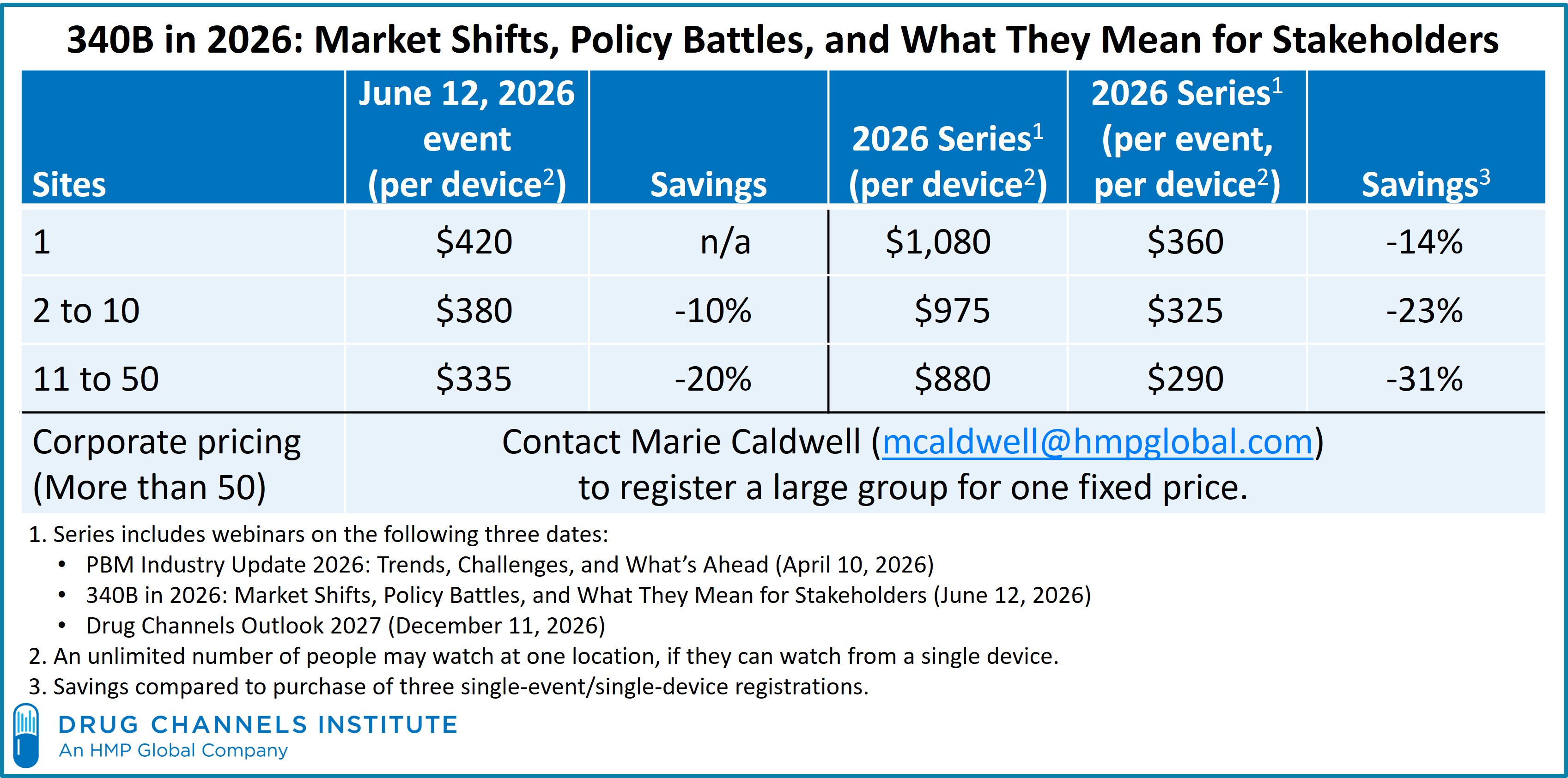
Take advantage of this exclusive educational opportunity for just $420 per viewing device. Once you register, you'll receive a unique Zoom access link within 24 hours—making it easy to add the event to your calendar and ensure you don’t miss out.
Special Discounts For Teams!
We understand that many professionals are working remotely, so we’re offering substantial savings for multiple registrations from the same organization. What's more, an unlimited number of attendees can watch together at a single physical location with one registered device.
Important Reminder: Each device at a single physical location must have its own registration. The webinar may not be recorded, streamed, broadcast, or shared across different locations, devices, or sites.
Click here to register. All discounts will be automatically computed based on the number of registrations you enter in your cart. (You can reset the cart by entering 0 in the quantity field.)
Payment can be made with all major credit cards (Visa, MasterCard, American Express, and Discover). Prefer check or ACH? Click here to request an invoice.
IMPORTANT THINGS TO KNOW
Watch and listen via any modern browser via computer, tablet, or mobile. (No telephone access.)
Each registrant will receive an email with a link to watch the event. This link is unique to the registrant and can only be accessed once.
Every registrant will also receive a link to download Dr. Fein's slides.
This event is part of The Drug Channels 2026 Video Webinar Series. If you already purchased access to the 2026 Drug Channels Video Webinar Series, then you already should have received an email from Zoom with a link to access the June 12, 2026, event.
Organizations that purchased corporate access for The Drug Channels 2026 Video Webinar Series will receive a custom, branded signup link so employees can easily register. We will automatically refund payments from anyone at a company with corporate access who purchases a single registration using their corporate email account.
Each registration for a DCI webinar is valid for a single device at a single physical location. Each device at a physical location requires its own registration. Attendees are not permitted to record, stream, share, or project a DCI webinar to other sites or locations. Purchasers who violate this limitation by recording, streaming, sharing, or projecting a DCI webinar to other sites, devices, or locations will be liable for the full cost of all locations that viewed the webinar. DCI reserves the right to prohibit purchasers who violate our terms from attending future DCI webinars.
Below, we share our proprietary analyses of the specialty market’s participants. DCI identified more than 1,900 pharmacy locations that have achieved specialty pharmacy accreditation from one of the two major independent accreditation organizations.
Despite growing revenues from specialty drugs, overall growth in accredited pharmacies has plateaued. However, pharmacy locations owned by healthcare providers—hospitals, health systems, physician practices, and other healthcare providers—continue to expand and now account for nearly 40% of all accredited specialty pharmacy locations.
Read on for a bit of our arithmomania. Because in specialty pharmacy, what gets counted reveals who really counts.
Three is still the magic number for pharmacy benefit managers (PBMs).
For 2025, 80% of all equivalent prescription claims were processed by three companies: the CVS Caremark business of CVS Health, the Express Scripts business of Cigna, and the Optum Rx business of UnitedHealth Group. Express Scripts continued to pull ahead of its peers, while CVS Caremark’s claim volume declined for the second year.
Independent PBMs continued to gain business from these larger PBMs, showing fragmentation at the margins. Many smaller PBMs still rely on their larger competitors for claims processing, network management, and rebate negotiation. So even if a plan sponsor chooses an alternative PBM, the Big Three can still win with behind-the scenes economics.
The Big Three PBMs’ dominance persists, but they face growing regulatory and competitive constraints. The largest PBMs are restructuring their businesses in response to client demands, legislative changes, and legal pressures. The emerging Net Pricing Drug Channel will accelerate these shifts, forcing changes in how PBMs generate profits, structure contracts, and justify their role in the drug channel.
For a deeper dive into the state of the industry, register for DCI’s next webinar on April 10, 2026, from 12:00 p.m. to 1:30 p.m. ET. Adam J. Fein and Bryce Platt will unpack the good, the bad, and the ugly of the PBM industry—and explore what it means for you. Click here to learn more and sign up.
Special launch pricing discounts will be valid through April 6, 2026.
This report—our seventeenth edition—remains the most comprehensive, fact-based tool for understanding the entire U.S. drug pricing, reimbursement, and dispensing system. If you make strategic decisions in this industry, this report is essential reading.
WHAT’S INSIDE
Nearly 1,300 endnotes, most of which have hyperlinks to source materials
If you preordered, you should have received an email with download instructions last week. Didn’t get it? Contact us at dcisupport@hmpglobal.com, and we’ll take care of it.
Our goal is simple: help you understand how the drug channel really works—and where it’s going.
That's why DCI reports are widely used by nearly every company involved in the drug channel:
Pharmaceutical manufacturers
Wholesalers, pharmacists, and pharmacy owners
Payers, insurers, and plan sponsors
Hospitals, benefit managers, and managed care executives
Policy analysts, investors, consultants, and more
In other words, this report helps you understand what your customers, partners, and competitors are reading—and how they’re thinking.
The chart below illustrates the depth and breadth of the 2026 edition. The numbers indicate the report chapter that corresponds to, explains, and analyzes each channel flow.
FUN FACTS ABOUT THE 2026 EDITION
The 12 chapters are self-contained—you don't need to read them in order. (Really!) Use the report as a reference guide or read it end-to-end. It’s designed as both a foundational resource and a deep dive into the latest trends and developments.
There are tons of internal hyperlinks to help you navigate and focus on what matters most to you.
We’ve updated all market and industry data with the most current insights, including our annual analyses of the largest pharmacies, specialty pharmacies, and PBMs.
One of the available licenses gives you the option to download an additional PowerPoint file with images of all 270 exhibits—making it easier to share insights with your team. (Note: All license versions include exhibits within the text.)
There are a staggering 1,284 endnotes (!), most of which have direct hyperlinks to original source materials. This allows you to validate, explore, and go deeper.
We have reluctantly removed all corny jokes and pop culture references. So, no memes and absolutely no references to SpongeBob SquarePants.
Thank you for your interest in our work. If you have any questions before purchasing a license to the report, please email me. We look forward to helping you succeed in the evolving U.S. drug channel.
For 2025, DCI estimates that total prescription dispensing revenues at retail, mail, long-term care, and specialty pharmacies reached $751 billion in 2025, up 10% from the 2024 figure.
GLP-1 agonist drugs have become the dominant driver of revenue growth. Over the past five years, increases in dispensing revenues from GLP-1 products accounted for about 60% of retail pharmacies’ total revenue growth.
The table below—one of 270 in our new report—racks up DCI's first look at the 15 largest organizations that competed for a share of those dollars. For a sneak peek at the complete report, click here to download our free 32-page report overview (including key industry trends, What's New in this edition, the Table of Contents, and a List of Exhibits). We’re offering special discounted pricing if you order before April 6, 2026.
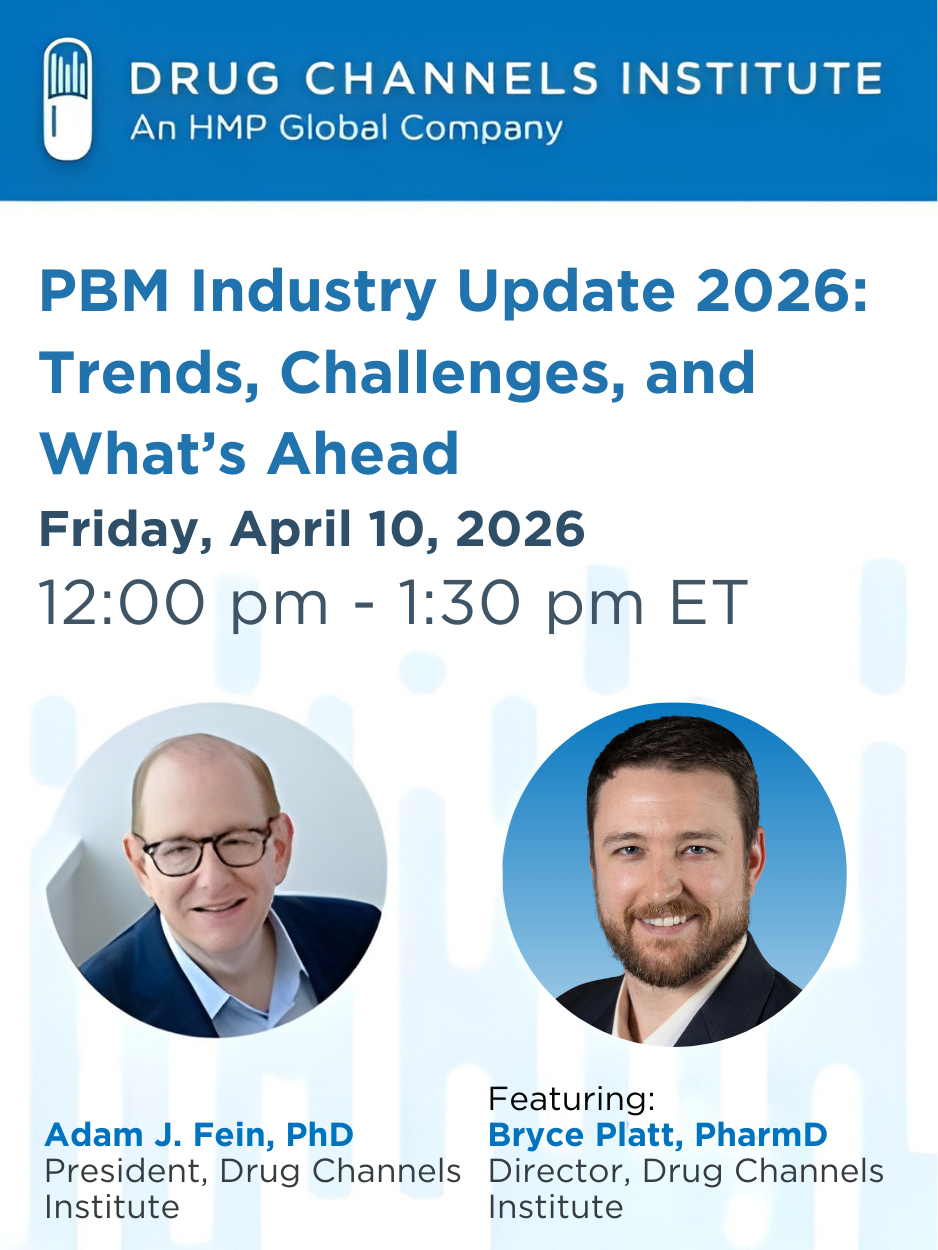
Don’t miss DCI’s next webinar on April 10, 2026, from 12:00 p.m. to 1:30 p.m. ET. Dr. Adam J. Fein and Bryce Platt will unpack the good, the bad, and the ugly of the PBM industry—and explore what it means for you. Click here to learn more and sign up.
Join industry expert Adam J. Fein, Ph.D., and his colleague Bryce Platt for an exclusive deep dive into the latest trends, data, and strategies shaping the pharmacy benefit management (PBM) industry. Drawing from the brand-new 2026 Economic Report on U.S. Pharmacies and Pharmacy Benefit Managers, they will provide invaluable insights to help you and your team stay informed about this rapidly evolving market.
Adam and Bryce will share their expert analysis on critical industry developments, including:
The competitive landscape of major PBMs, with exclusive new market share data from DCI
Key business trends among leading PBMs and their impact on the market
PBMs’ expanding role in specialty pharmacy and how it’s reshaping the industry
Exclusive insights into the Federal Trade Commission’s settlement with Express Scripts
The outlook for the rebate system and the emergence of the Net Pricing Drug Channel
What the Consolidated Appropriations Act of 2026 (CAA) means for PBMs’ profits and business strategies
The evolving role of independent PBMs and their market positioning
How health-system-owned PBMs are changing the game
Fresh data on plan sponsors’ perspectives on their PBM partners
Key takeaways from PBMs’ 2026 commercial formularies
The coming shifts in PBM compensation models
The risks and rewards of PBM-affiliated private-label products and GPOs
Latest developments in the 340B Drug Pricing Program
State and federal PBM regulations: What’s ahead?
Emerging controversies, challenges, and threats to watch in the industry
And much more!
As always, the presenters will clearly distinguish their opinions and interpretations from the objective facts and data.
This 90-minute video webinar will feature a dedicated Q&A session, where attendees can unmute and engage directly with Adam and Bryce.
Register now to stay informed and get ahead of the curve on the PBM industry!
PRICING OPTIONS
Take advantage of this exclusive educational opportunity for just $420 per viewing device. Once you register, you'll receive a unique Zoom access link within 24 hours—making it easy to add the event to your calendar and ensure you don’t miss out.
Special Discounts For Teams!
We understand that many professionals are working remotely, so we’re offering substantial savings for multiple registrations from the same organization. What's more, an unlimited number of attendees can watch together at a single physical location with one registered device.
Important Reminder: Each device at a single physical location must have its own registration. The webinar may not be recorded, streamed, broadcast, or shared across different locations, devices, or sites.
Click here to register. All discounts will be automatically computed based on the number of registrations you enter in your cart. (You can reset the cart by entering 0 in the quantity field.)
Payment can be made with all major credit cards (Visa, MasterCard, American Express, and Discover). Prefer check or ACH? Click here to request an invoice.
On March 24, 2026, Drug Channels Institute will release The 2026 Economic Report on U.S. Pharmacies and Pharmacy Benefit Managers. This report—our seventeenth edition—remains the most comprehensive, fact-based tool for understanding the entire U.S. drug pricing, reimbursement, and dispensing system. If you make strategic decisions in this industry, this report belongs on your desk.
12 chapters, 500+ pages, 270 exhibits, and nearly 1,300 endnotes. No other resource matches the scope, depth, and rigor of this resource.
We are offering you the opportunity to preorder the thoroughly updated, revised, and expanded 2026 edition at special discounted prices. Preordering guarantees early access and locks in the lowest available price. Those who preorder will receive a download link before March 30.
Special preorder and launch pricing discounts will be valid through April 6, 2026. After that date, prices increase. Secure your discount now.
The report was researched and written by the Drug Channels Institute team, led by Adam J. Fein, Ph.D. As shown below, the 2026 edition delivers unmatched depth and breadth. The numbers indicate the report chapter that corresponds to, explains, and analyzes each channel flow.
The 2026 Economic Report on U.S. Pharmacies and Pharmacy Benefit Managers contains the most current market and industry data available, including DCI’s annual analyses of the market positions of the largest pharmacies, specialty pharmacies, and PBMs. Throughout the report, we have added new industry data, deepened our coverage of many topics, and expanded our analysis of emerging trends.
This definitive, nonpartisan report will aid pharmaceutical manufacturers, wholesalers, pharmacists, pharmacy owners, hospital executives, pharmacy buyers, benefit managers, managed care executives, policy analysts, investors, consultants, and anyone else who wants to understand and benefit from this ever-changing industry. If your organization competes, negotiates, invests, or sets policy in this market, this report will sharpen your strategy.
There are many notable updates in this 2026 edition, including:
A new Section 4.3.4. analyzes manufacturers’ direct-to-patient (DTP) websites and TrumpRx within the broader context of patient-paid prescriptions.
A new Section 5.5. deconstructs the three largest PBMs’ gross profits. Some of this material previously appeared in Chapter 11.
Material in Section 7.1., Section 9.1., and Section 9.3. reflects the PBM legislative reforms contained within the Consolidated Appropriations Act, 2026 (P.L. 119-75), which became law in February 2026.
Material in Section 8.4. and Section 9.3. incorporates implications of the 2026 settlement between Express Scripts and the Federal Trade Commission.
A new Section 6.3.3. reviews research on how the IRA’s implementation has affected out-of-pocket spending by Medicare Part D beneficiaries.
A new Section 11.2.4. analyzes pharmacies’ dispensing profits under the Inflation Reduction Act of 2022 (IRA).
A new Section 12.1.4. evaluates the potential implications of most favored nation (MFN) and tariff policies on the drug channel.
In Section 12.3.1., our illustration of major vertical business relationships among drug channel businesses now incorporates affiliated third-party administrators (TPAs) and administrative services only (ASO) platforms.
We have also improved our presentation of material about the IRA and the 340B Drug Pricing Program.
Thank you for your interest in our work. If you have any questions before purchasing a license to the report, please email me. We look forward to supporting your team’s success in 2026.
The boffins at the Centers for Medicare & Medicaid Services (CMS) recently dropped the latest National Health Expenditure (NHE) data, which track all U.S. spending on healthcare. (Links below.)
We spent an astounding $5,278,588,000,000 on healthcare in 2024. Yes, that’s $5.3 trillion!
Retail outpatient prescription drugs accounted for less than 9% of that total. More than half of net outpatient drug spending was paid by federal, state, and local government programs. Below, we delve into the spending trends, which reveal the impact of the Inflation Reduction Act (IRA) on Medicare spending, the boom in healthcare marketplaces, and the post-pandemic bust in Medicaid.
Contrary to what you might read, the government’s data show that drug spending growth was not driven by purportedly “skyrocketing” drug prices. In reality, nearly all of the increase in drug spending reflected higher utilization—more people treated, more prescriptions dispensed, and shifts among drugs dispensed—rather than higher net prices.
Prices may grab headlines, but utilization—and taxpayers—are driving the spending story. When prices stop being signals, markets stop being markets.
Join Dr. Adam J. Fein, president of Drug Channels Institute (DCI), for three new video webinars during 2026. These live, interactive events are designed for executives who need timely insight into the rapidly changing U.S. drug channel. They will be broadcast via Zoom from the Drug Channels Video studio in beautiful downtown Philadelphia.
During these events, Dr. Fein will address the latest issues confronting the U.S. drug channel. Topics will be determined based on what’s happening—trends, policy changes, company announcements, and more. He’ll share DCI’s latest market data to help you stay on top of new developments. You will be able to use these events as both a capstone of your current learning and a touchpoint for the future.
EVENT SCHEDULE
The three events are scheduled for 12:00 p.m. to 1:30 p.m. ET on the following dates:
April 10, 2026
June 12, 2026
December 11, 2026 (Drug Channels Outlook 2027)
Topics will be finalized closer to each date to reflect breaking trends, policy changes, and major company announcements—so the content stays timely, relevant, and immediately useful.
PRICING OPTIONS
Register for all three events for $1,080 per viewing device (or $360 per viewing device for a single event). We understand that many professionals are working remotely, so we’re offering substantial savings for multiple registrations from the same organization. What's more, an unlimited number of attendees can watch together at a single physical location with one registered device.
Important Reminder: Each device at a single physical location must have its own registration. The webinars may not be recorded, streamed, broadcast, or shared across different locations, devices, or sites.
Click here to register. All discounts will be automatically computed based on the number of registrations you enter in your cart. (You can reset the cart by entering 0 in the quantity field.)
Payment can be made with all major credit cards (Visa, MasterCard, American Express, and Discover). Prefer check or ACH? Click here to request an invoice.
IMPORTANT THINGS TO KNOW
Watch and listen via any device with a web browser (computer, iPad, iPhone/Android, etc.) There is no access via telephone.
We use Zoom technology for this webinar. Every registrant will receive an email from Zoom with a link to watch the event. This link is unique to the registrant and can only be accessed once. We recommend that every registrant downloads the Zoom client software/app.
Prior to each event, every registrant will receive an email from Zoom with a link to access the event and add it to their calendar. They will also receive reminder emails one week before and one hour before each event.
During each webinar, Dr. Fein will give participants an opportunity to unmute themselves and ask live questions.
Can’t attend the live event? After each event, every registrant will receive an email with information on how to view a replay of the Zoom video recording. Every registrant will also be able to download a PDF of the full slide deck.
Each registration for a DCI webinar is valid for a single device at a single physical location. Each device at a physical location and the viewer(s) at that location requires its own registration. Attendees are not permitted to record, stream, share, or project a DCI webinar to other sites. Purchasers who violate this limitation by recording, streaming, sharing, or projecting a DCI webinar to other sites are liable for the full cost of all locations that viewed the webinar. DCI reserves the right to ban purchasers who violate our terms from attending future DCI webinars.
It's time for Drug Channels’ annual examination of U.S. brand-name drug pricing.
For 2025, brand-name drugs’ average list prices grew by only 3.5%, but net prices declined. When manufacturers’ rebates and discounts are factored in, drugs’ average net prices—both before and after inflation—fell. Details and additional commentary below.
As I have been predicting, the gross-to-net bubble is deflating due to the combined impacts of government actions and consumer behavior.
For 2024 and 2025, manufacturers reduced the wholesale acquisition cost (WAC) list prices for more than 20 brand-name drugs. For 2026, manufacturers will cut prices on at least 15 more drugs, which will reduce gross brand-name revenues by $35 to $40 billion. List prices are dropping by –25% to –85%.
The data leave no doubt: the bubble is finally leaking air. We are entering the Net Pricing Drug Channel (#NPDC)—a market environment in which net prices, not list prices, drive access, economics, and strategy.
The NPDC will reward simplicity, punish rebate dependence, and force every channel participant to rethink how money actually moves. Time to get ready.
This week, I’m rerunning some popular posts while I prepare for today’s live video webinar: Drug Channels outlook 2026. I'll be discussing why and how the gross-to-net bubble will be deflating.
Is the gross-to-net bubble—the ever-widening gap between brand-name drug sales at list prices and their net revenues after rebates and discounts—finally beginning to deflate?
Drug Channels Institute (DCI) estimates that the gross-to-net reductions for all brand-name drugs reached $356 billion in 2024, a 7% increase over the previous year. Yet despite this record total, the bubble expanded at the slowest rate in at least a decade.
In our analysis below, we highlight five key forces driving this shift. Among them: manufacturers’ evolving market access strategies, which increasingly aim to offset—or circumvent—growing pricing pressure from both commercial and government payers.
Meanwhile, many patients remain adrift in the drug channel’s murky waters. As for SpongeBob SquarePants—the longtime mascot of the gross-to-net bubble here at Drug Channels—he’s still with us…but may be eyeing the exit.
Over the summer, the boffins at the Centers for Medicare & Medicaid Services (CMS) released the latest projections for U.S. spending on healthcare. (See links below.) These data provide the latest official and apolitical look at the future of U.S. healthcare spending.
The top line projections highlight the government’s official view that prescription drugs dispensed by retail and mail pharmacies will have a modest impact on U.S. healthcare costs.
However, there are some notable changes from the previous forecast. CMS now expects that the Inflation Reduction Act’s changes to the Medicare Part D program will have a greater impact than previously projected, while private insurers will find drug costs creeping higher.
Below, we outline the four major takeaways from the latest projections, which continue to show that taxpayers—primarily via Medicare and Medicaid—will continue to dominate the employer-sponsored insurance market. And like it or not, vertically integrated insurers, PBMs, specialty pharmacies, and providers will continue to prosper.
Happy Thanksgiving, everyone! Before you stretch your stomach, stretch your mind with some fresh food for thought from across the drug channel. In this issue:
What else should you expect for 2026? Find out during my upcoming live video webinar, Drug Channels Outlook 2026, on December 12, 2025, from 12:00 p.m. to 1:30 p.m. ET. Click here to learn more and sign up. As always, we are offering special discounts if you want to bring your whole team.
2026 is shaping up to be another transformative year for the U.S. drug channel.
Join Adam J. Fein, Ph.D.—president of Drug Channels Institute (DCI) and author of Drug Channels—for his exclusive live video webinar:
Gain the latest data, forecasts, and policy insights to plan confidently for the year ahead. Our Outlook webinars are trusted annually by thousands of industry leaders for data-driven market insight.
This 90-minute online event—part of The Drug Channels 2025 Video Webinar Series—streams live from the Drug Channels studio in beautiful downtown Philadelphia.
Start the new year with clarity and confidence. Dr. Fein—one of the industry’s most trusted voices—will share an essential briefing on the trends, market forces, and policy developments that will shape the U.S. drug channel in 2026 and beyond.
Market & Policy Outlook: GLP-1 disruption; expectations for Medicare Part D; first-year implications of Medicare’s MFP implementation
PBMs & Payers: Profit model evolution, transparency pressures, and the future of discount cards, TrumpRx, and direct-to-patient strategies
Industry Integration: The evolving biosimilar market, wholesaler influence, and vertical integration trends for patient- and provider-administered drugs
Regulatory & Legislative Changes: The future of the 340B Drug Pricing Program and state/federal PBM oversight
And much more!
As always, Dr. Fein will clearly distinguish objective facts and data from his interpretations. This 90-minute video webinar will include a dedicated Q&A session, where attendees can unmute and engage directly with Dr. Fein.
Special launch pricing is available through October 27, 2025.
This report—our sixteenth edition—remains the most comprehensive, data-driven resource for understanding and analyzing the large and growing U.S. pharmaceutical distribution industry.
With 9 chapters, more than 400 pages, 187 exhibits, and over 850 endnotes, this report is unmatched in scope and depth. There’s simply no other resource like it.
Order today to secure your copy of this fully updated, revised, and expanded 2025-26 edition at special discounted prices.
The 2025-26 Economic Report on Pharmaceutical Wholesalers and Specialty Distributors remains the most comprehensive, fact-based tool for understanding and analyzing the large and growing U.S. pharmaceutical distribution industry. Widely regarded as the industry standard, this encyclopedic resource offers a definitive guide to wholesale distribution’s role in the complex web of U.S. prescription drug channels.
The chart below illustrates the vertical integration and broad reach of the three largest companies in U.S. pharmaceutical distribution. The numbers in the chart correspond to the report chapter that explains and analyzes the specific business segment.
Updated analyses of strategies, market positions, and executive compensation for the Big Three—Cencora, Cardinal Health, and McKesson. We review each company’s business segments and underlying business profitability, based upon our proprietary economic models. This allows you to assess differences among the public companies’ organizational structure and financial performance.
Self-contained chapters that do not need to be read in order. (Really!) There are loads of internal hyperlinks to help you navigate the document and customize it to your specific interests and priorities.
The option to download an additional PowerPoint file with images of all 178 exhibits. This popular option helps you share the insights and data with others in your organization. (The exhibits appear within the text for all license versions.)
760 (!) endnotes, most of which have direct hyperlinks to original source materials for deeper learning.
No SpongeBob Squarepants, corny jokes, or pop culture references, all of which have been reluctantly removed.
Thank you for your continued interest in our research. Please email me (afein@drugchannels.net) with any questions before purchasing.
We look forward to sharing this year’s insights with you.



 By
By 




 This week, I’m rerunning some popular posts while I prepare for today’s live video webinar:
 This week, I’m rerunning some popular posts while I prepare for Friday's live video webinar:


